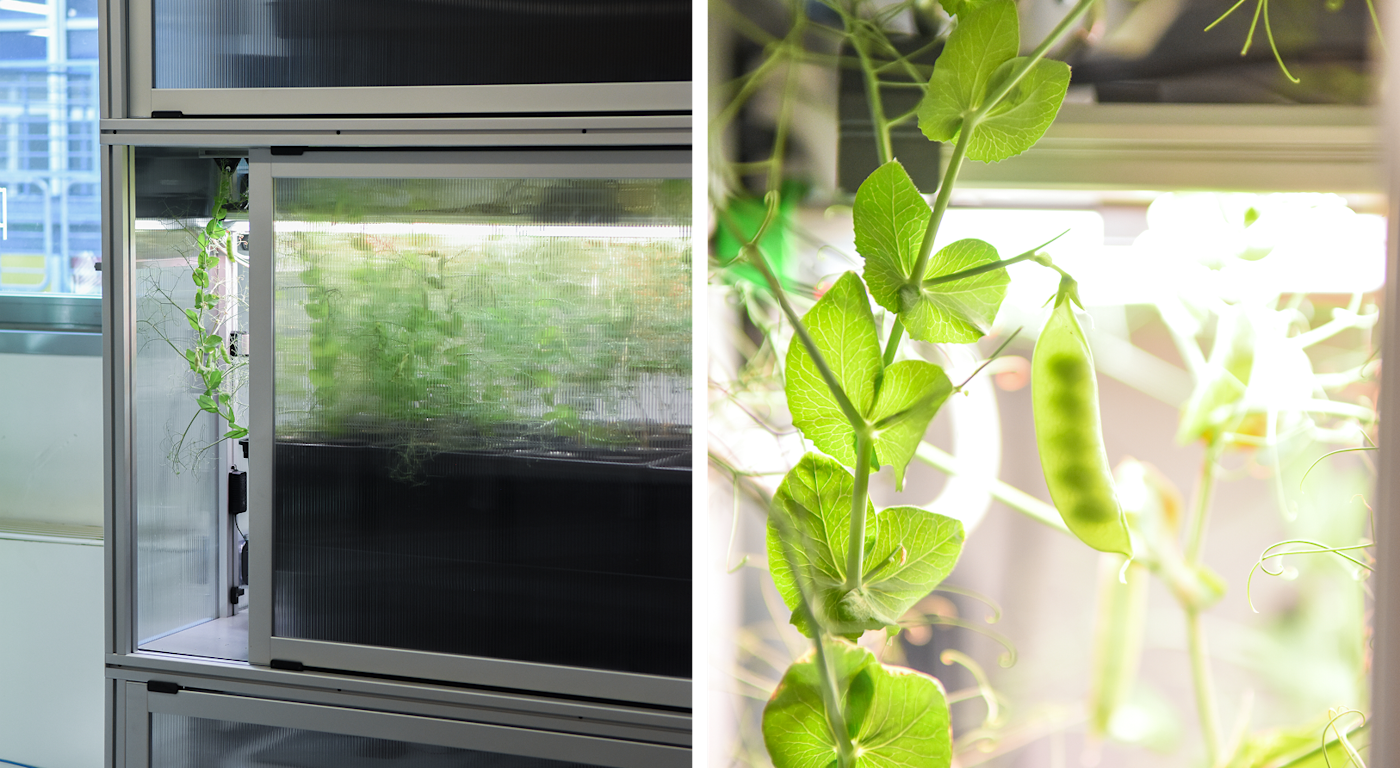
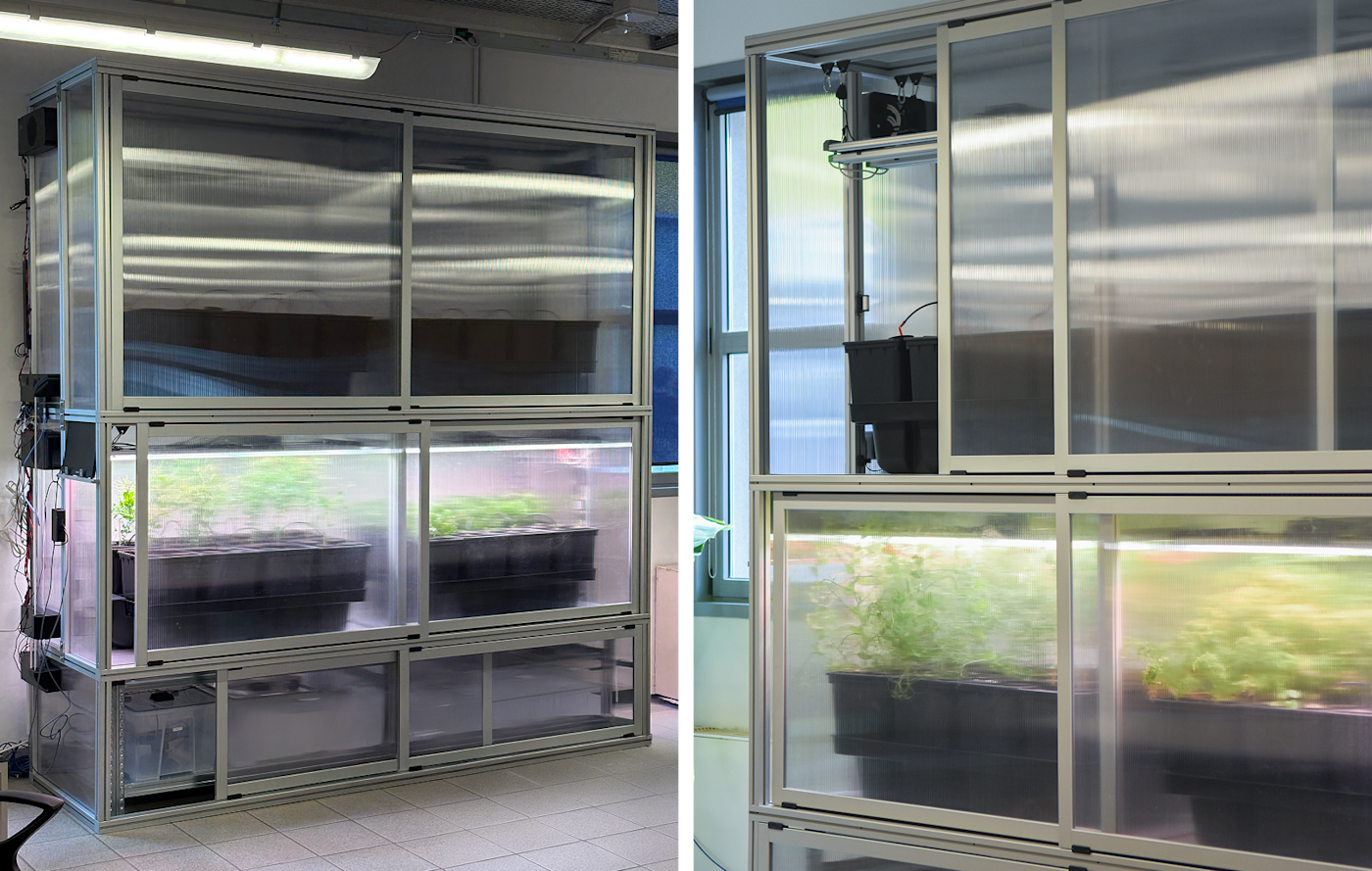
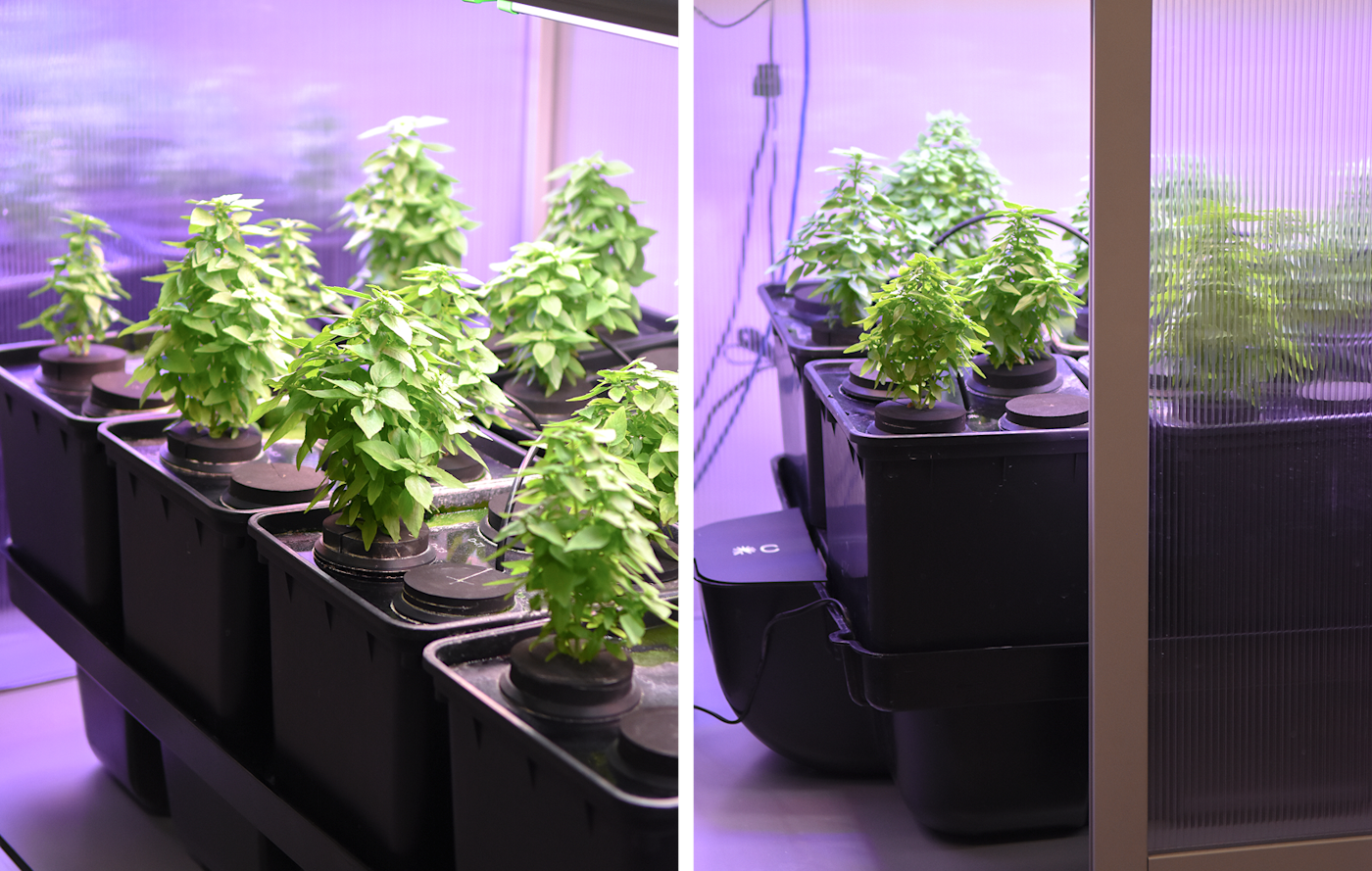
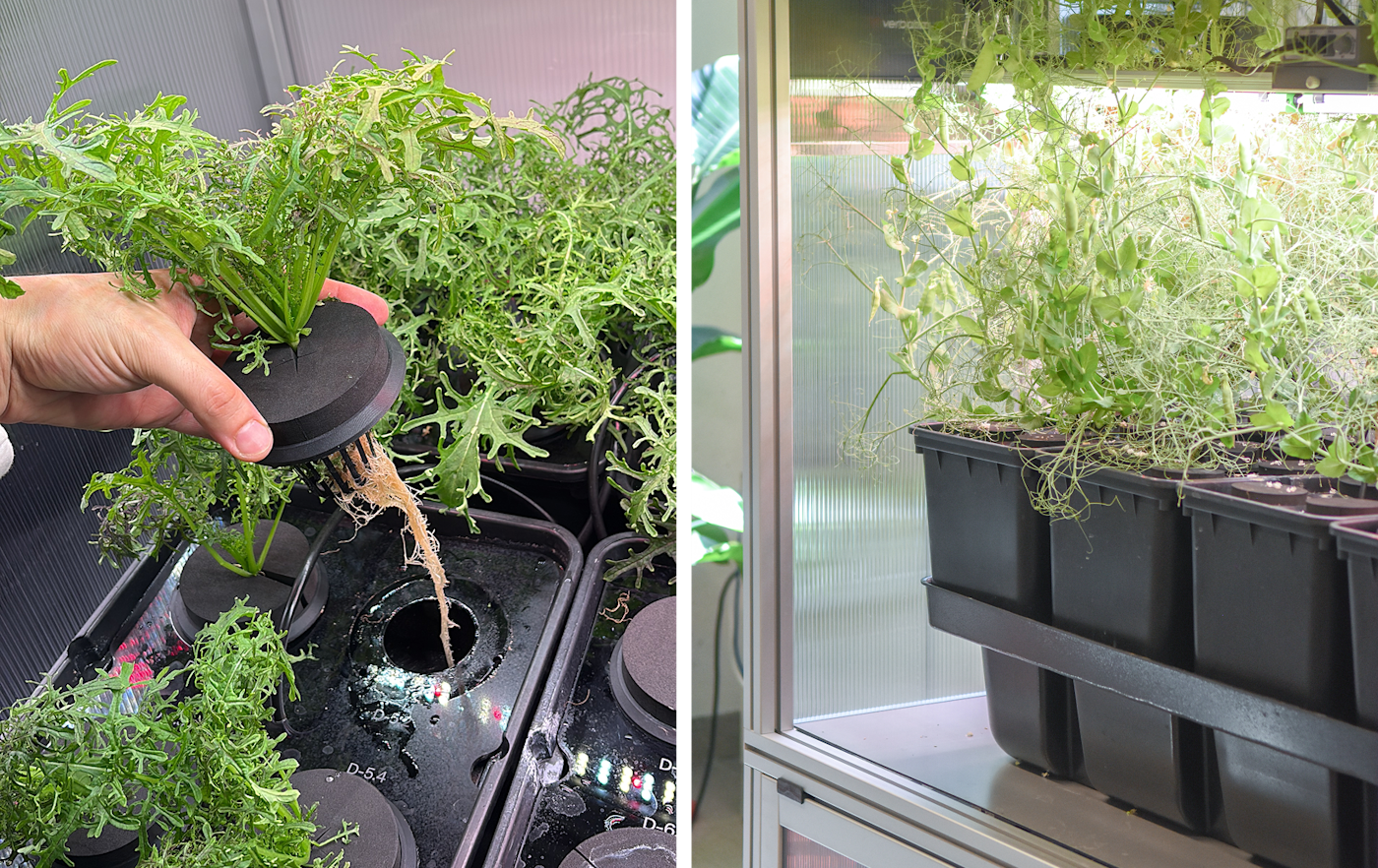
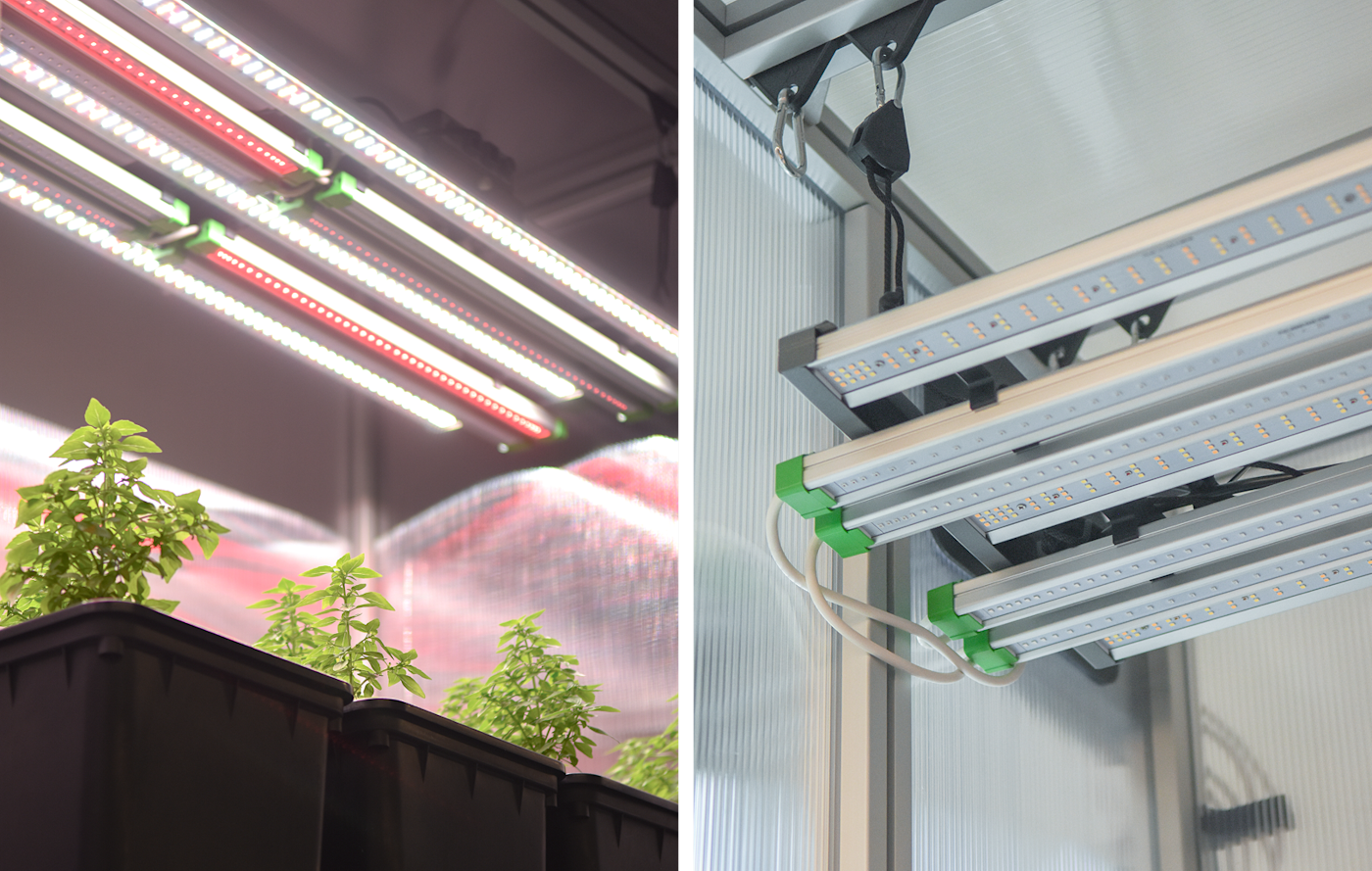
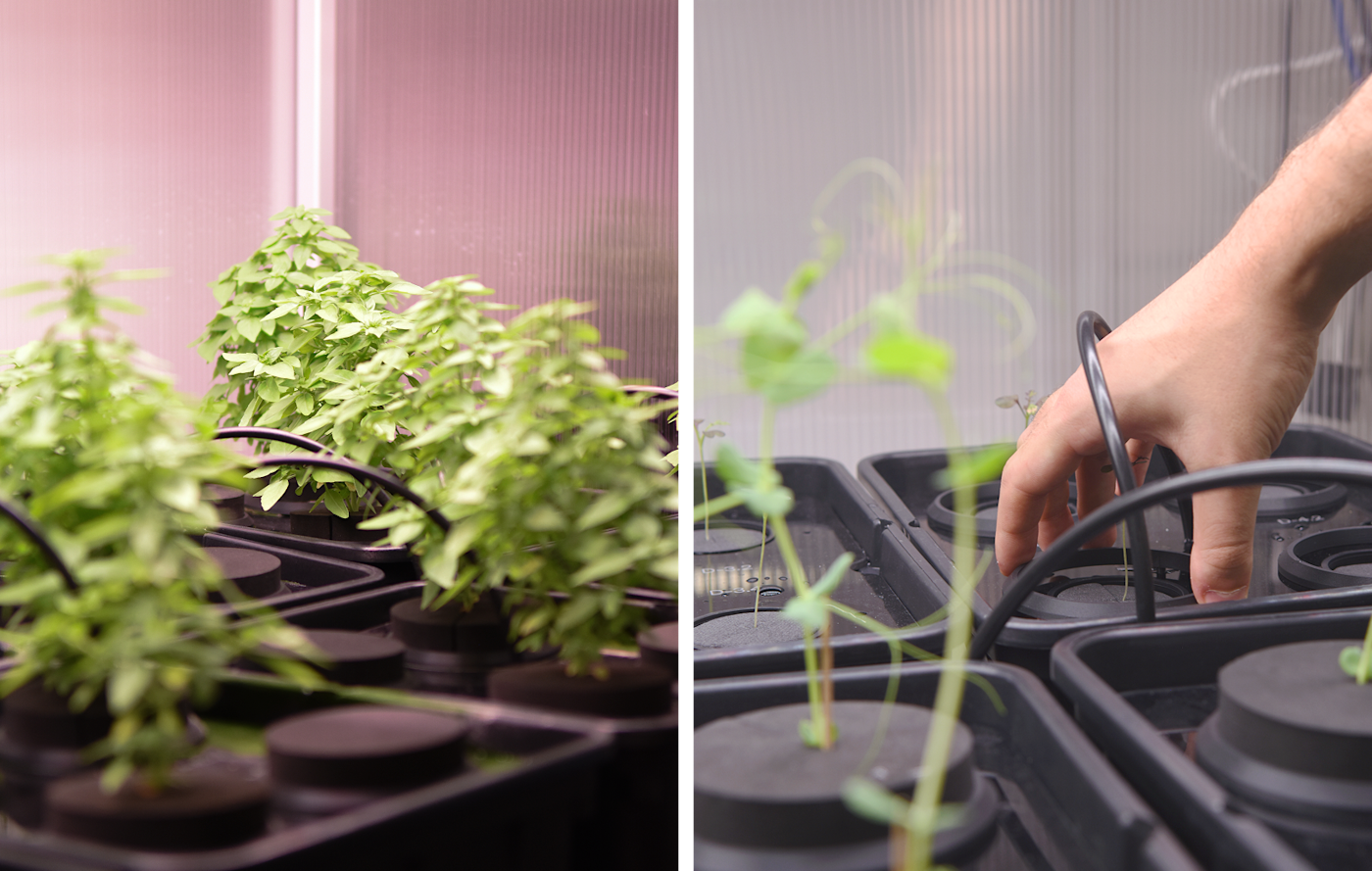
The platform is built on a frame of slotted aluminium profiles, which divides the system into four separate volumes, each isolated to sufficiently hold its own environmental conditions.
Its control is split into two main parts. The first covers light and water supply and relies on a commercial control system integrated into the structure, which schedules lights and pumps through an app. The second covers the environment inside each module and is a self-designed system, with both a physical and a digital interface, built on Arduino and Raspberry Pi control modules and integrated sensors.
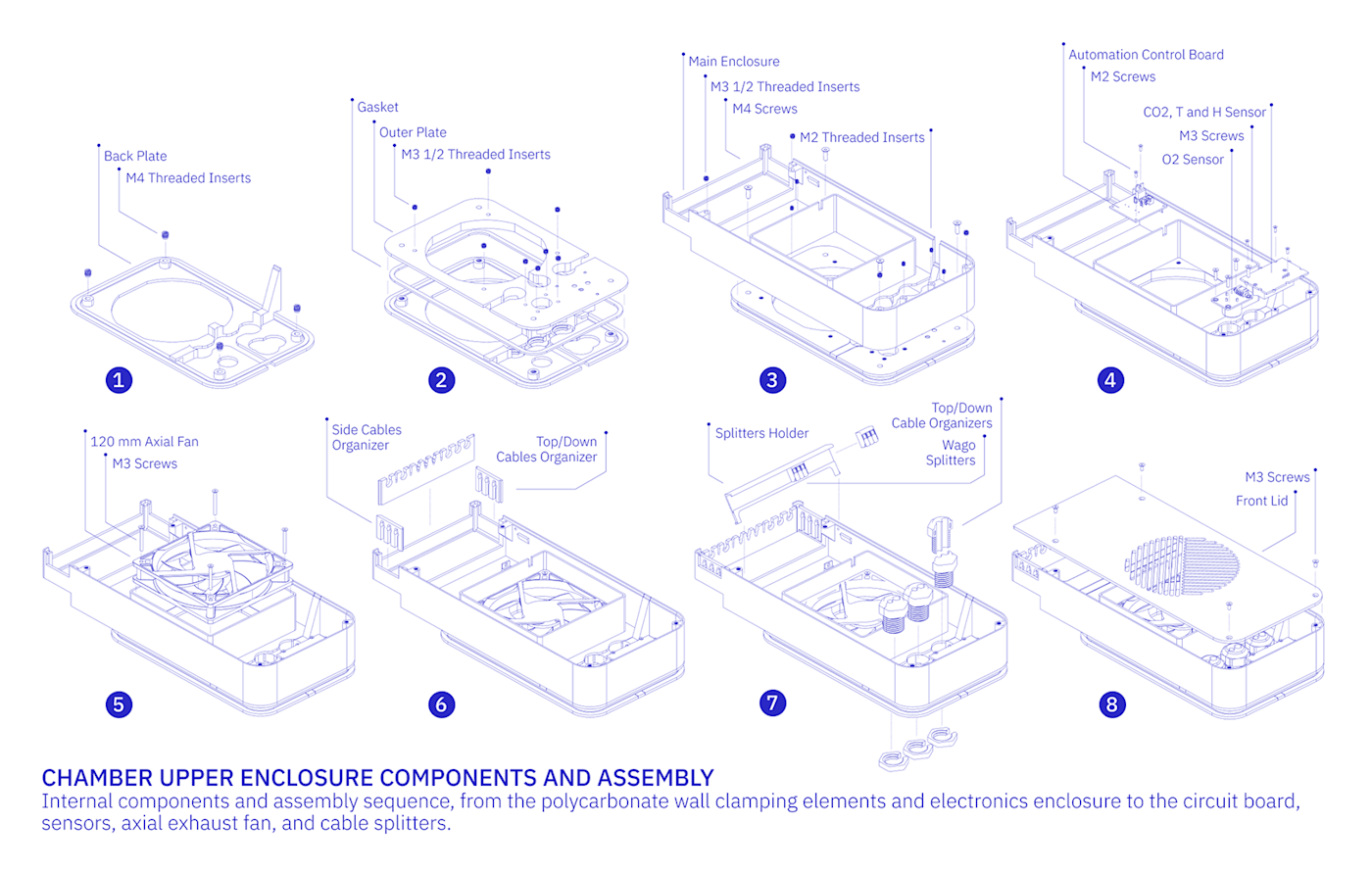
This second part is what makes the platform automated: instead of following fixed timings, it is meant to actively regulate the chamber conditions by itself, steering them toward the target parameters entered during an experiment. To do so, each module carries its own group of sensors, measuring CO2, oxygen, temperature, humidity and water level, and a set of actuators: intake and exhaust fans, a PTC heating element that raises the temperature, and mist makers, whose fine mist is pushed by a third fan into the ventilation duct and from there into the chambers.
 LORENZO SILVESTRI