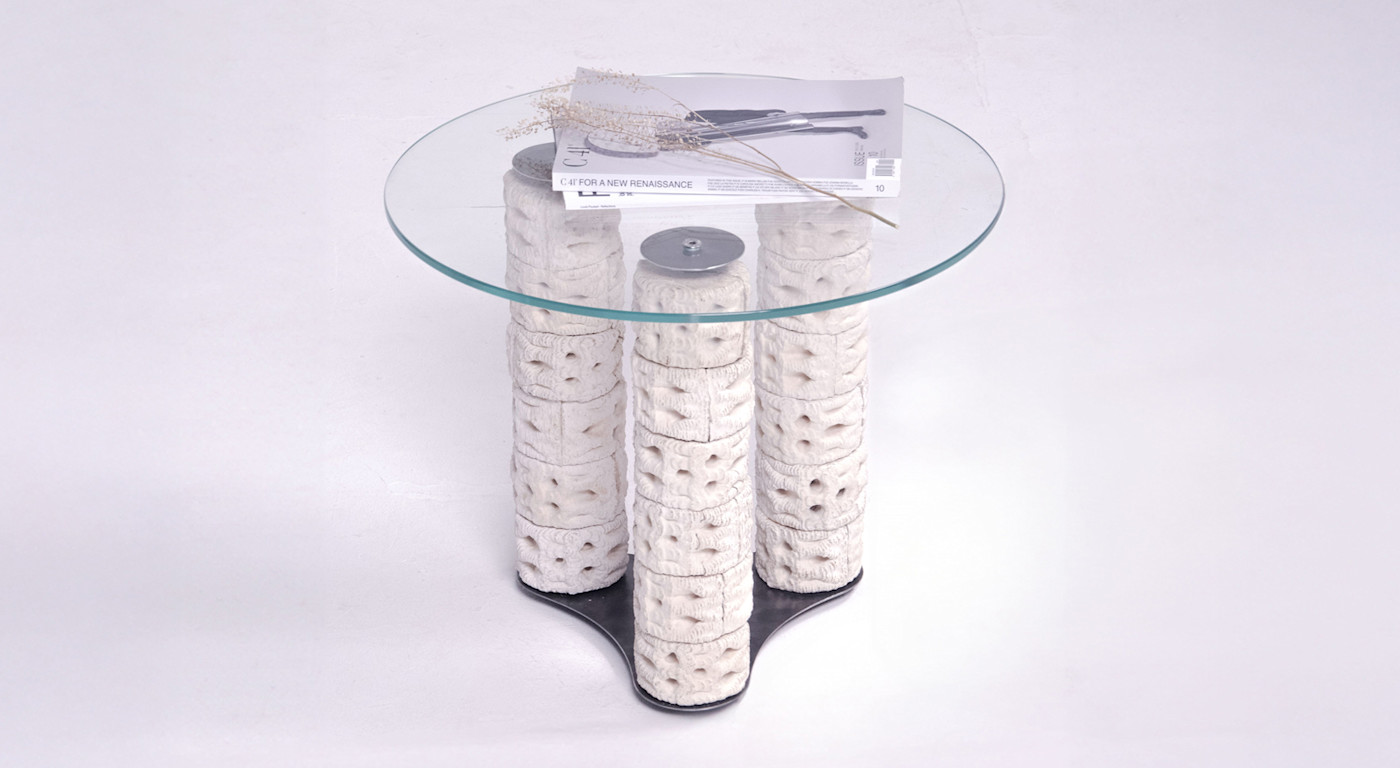
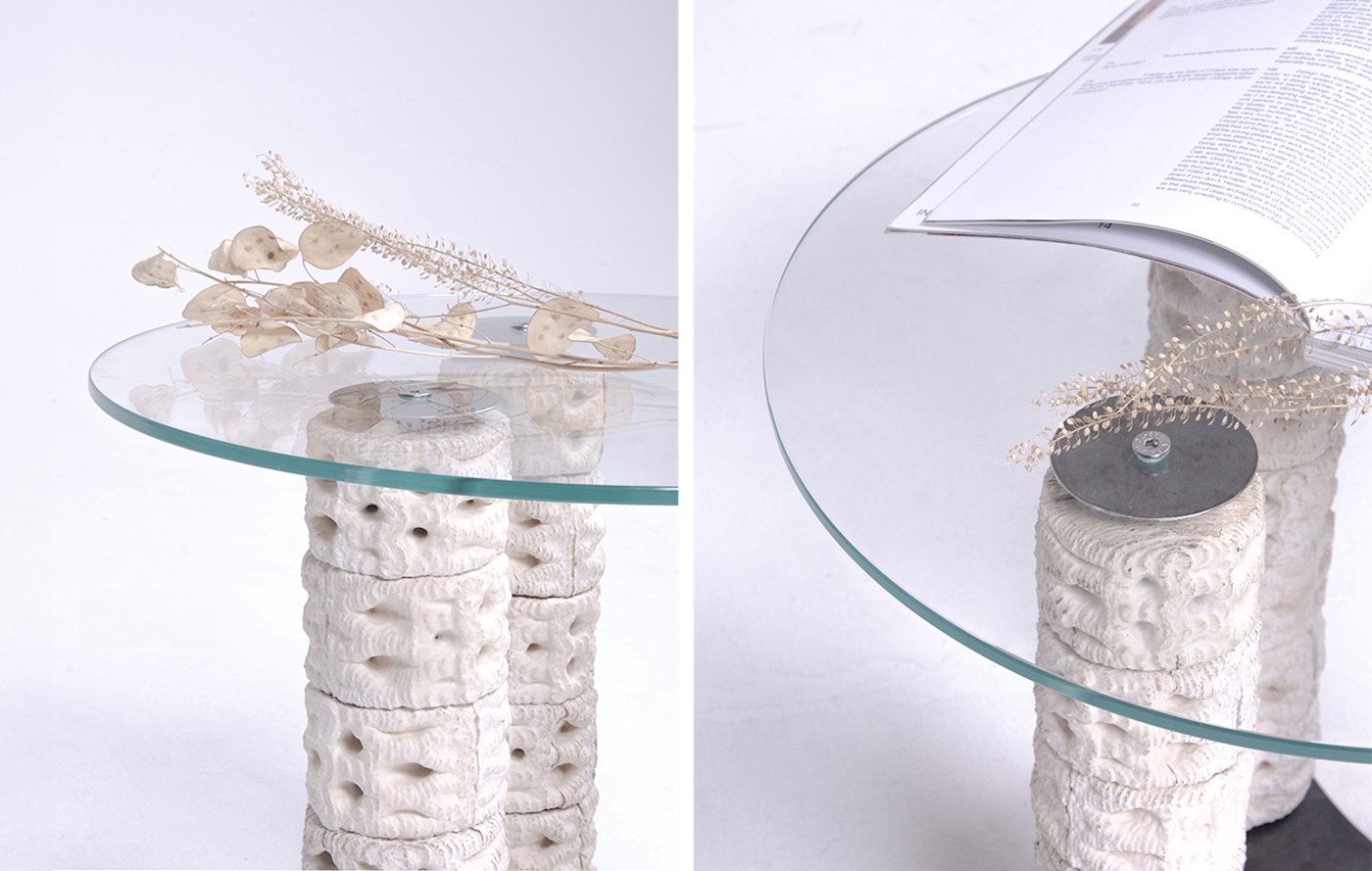
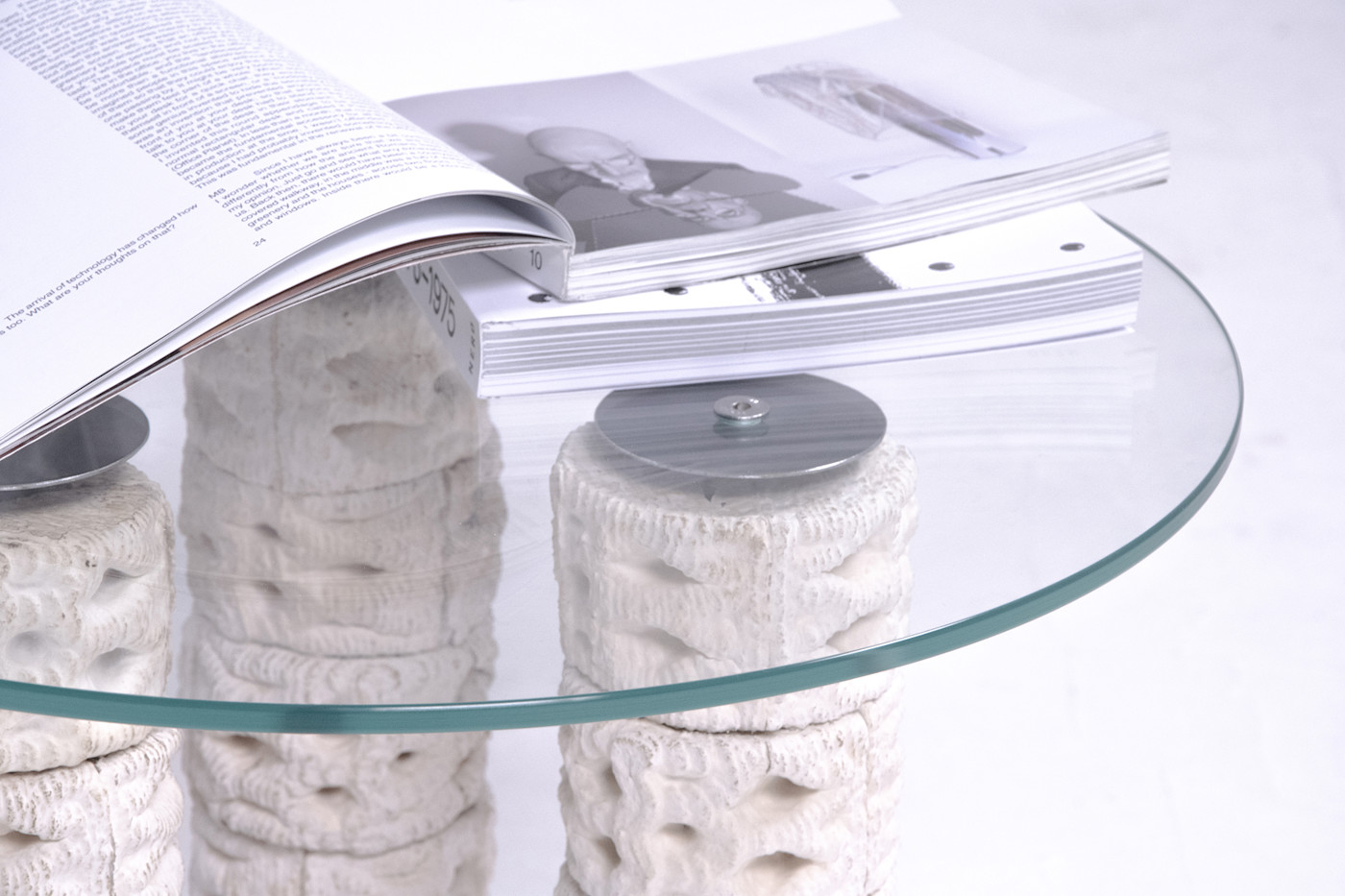
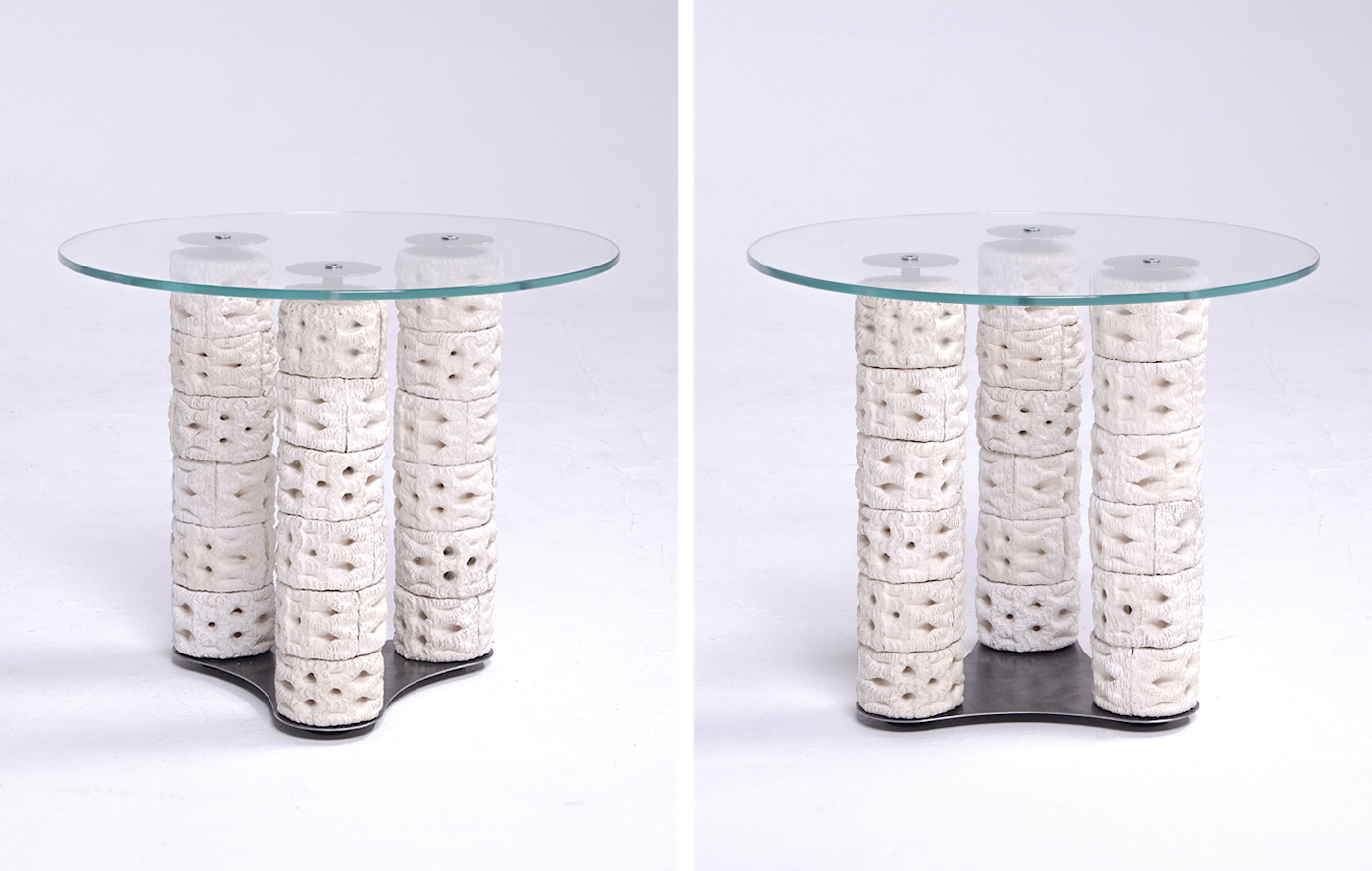
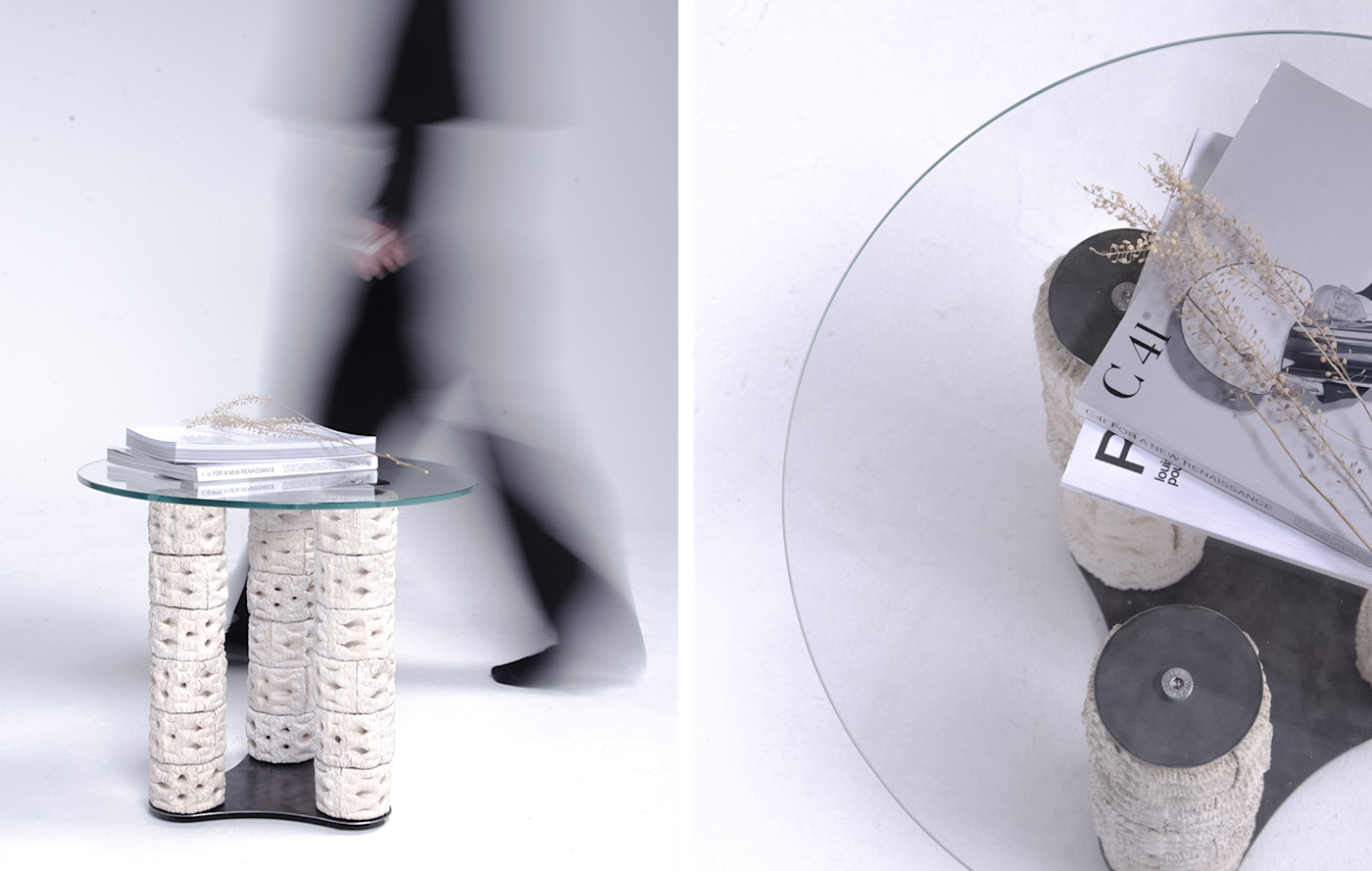
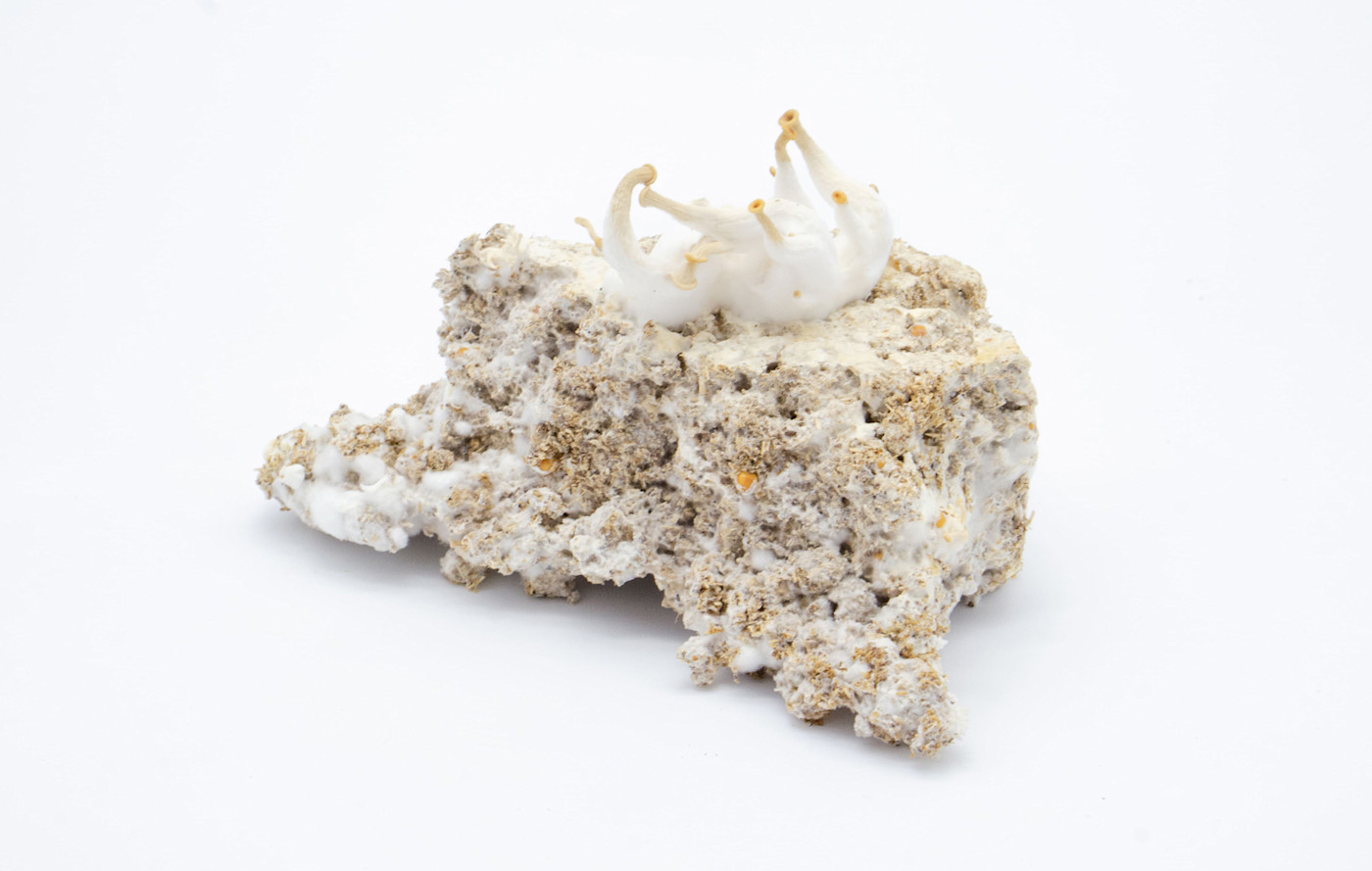
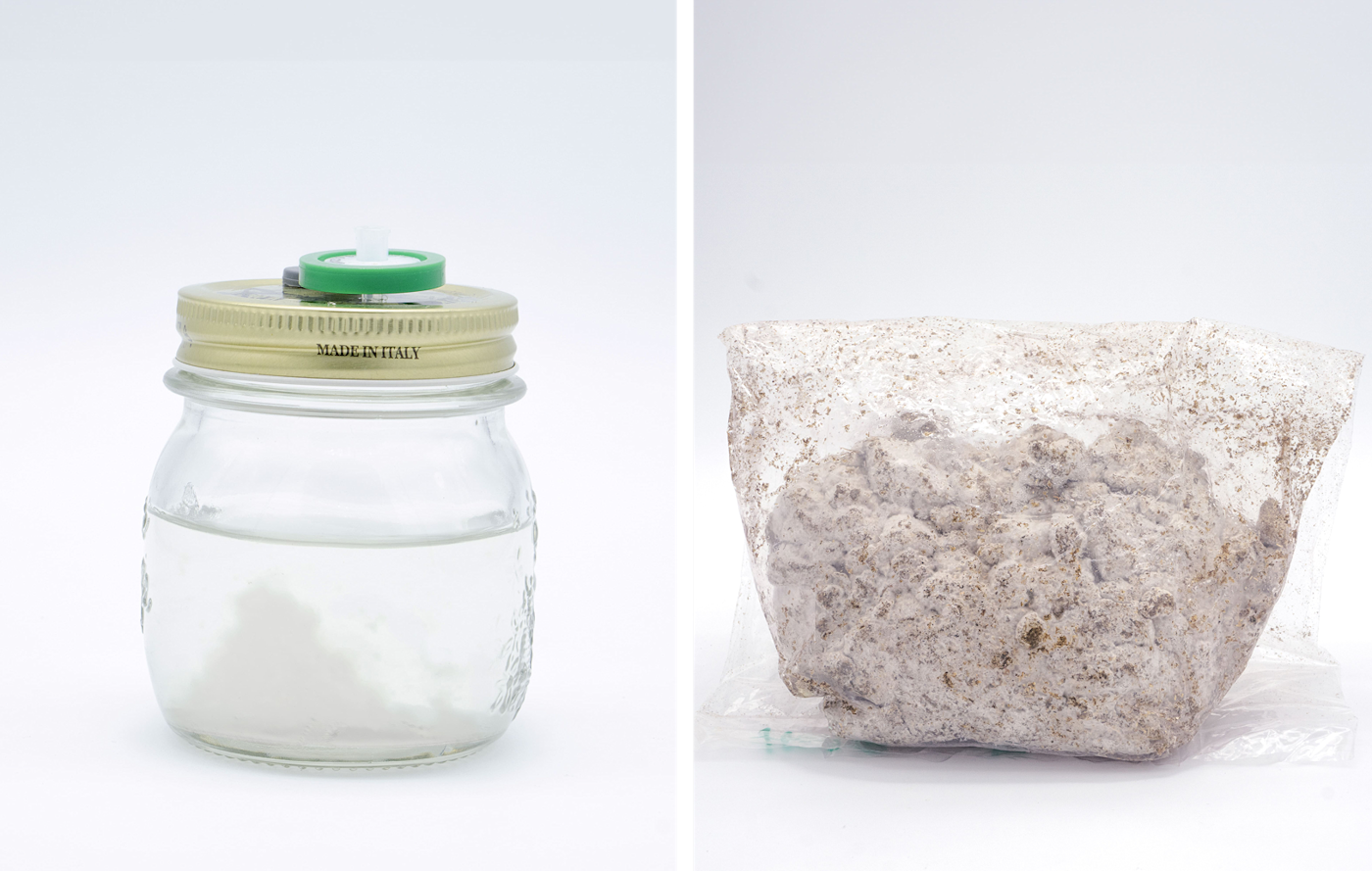
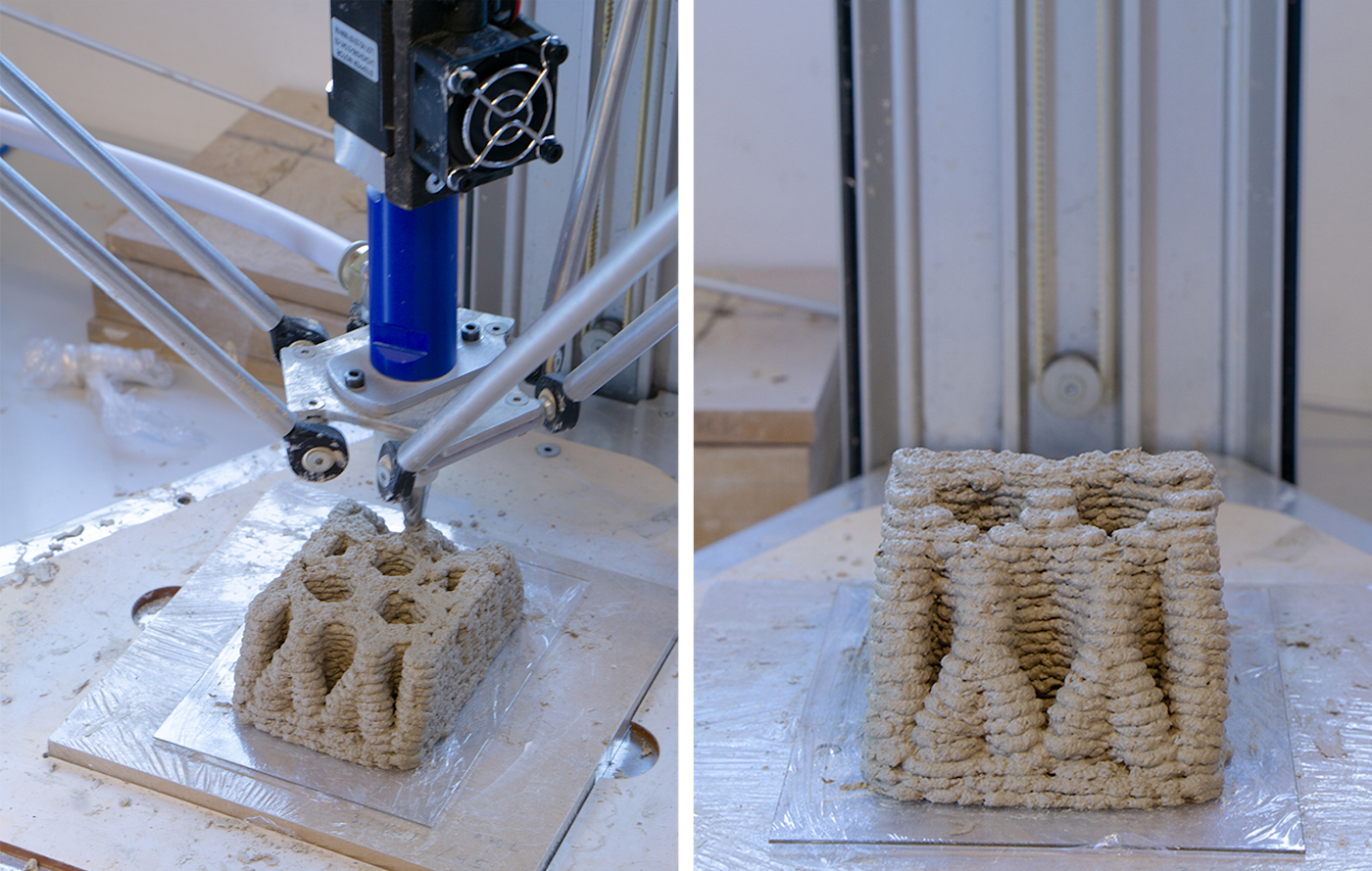
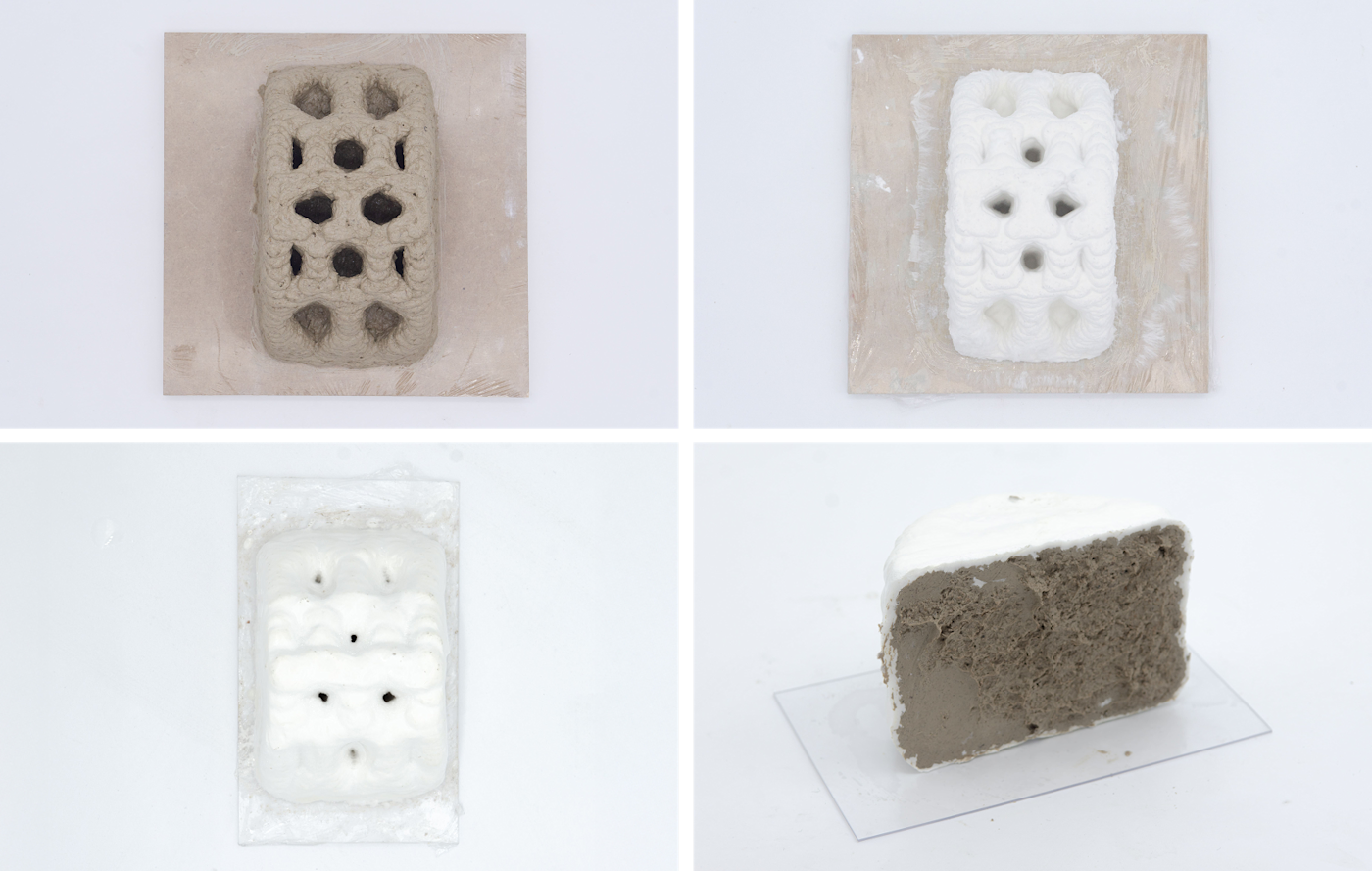
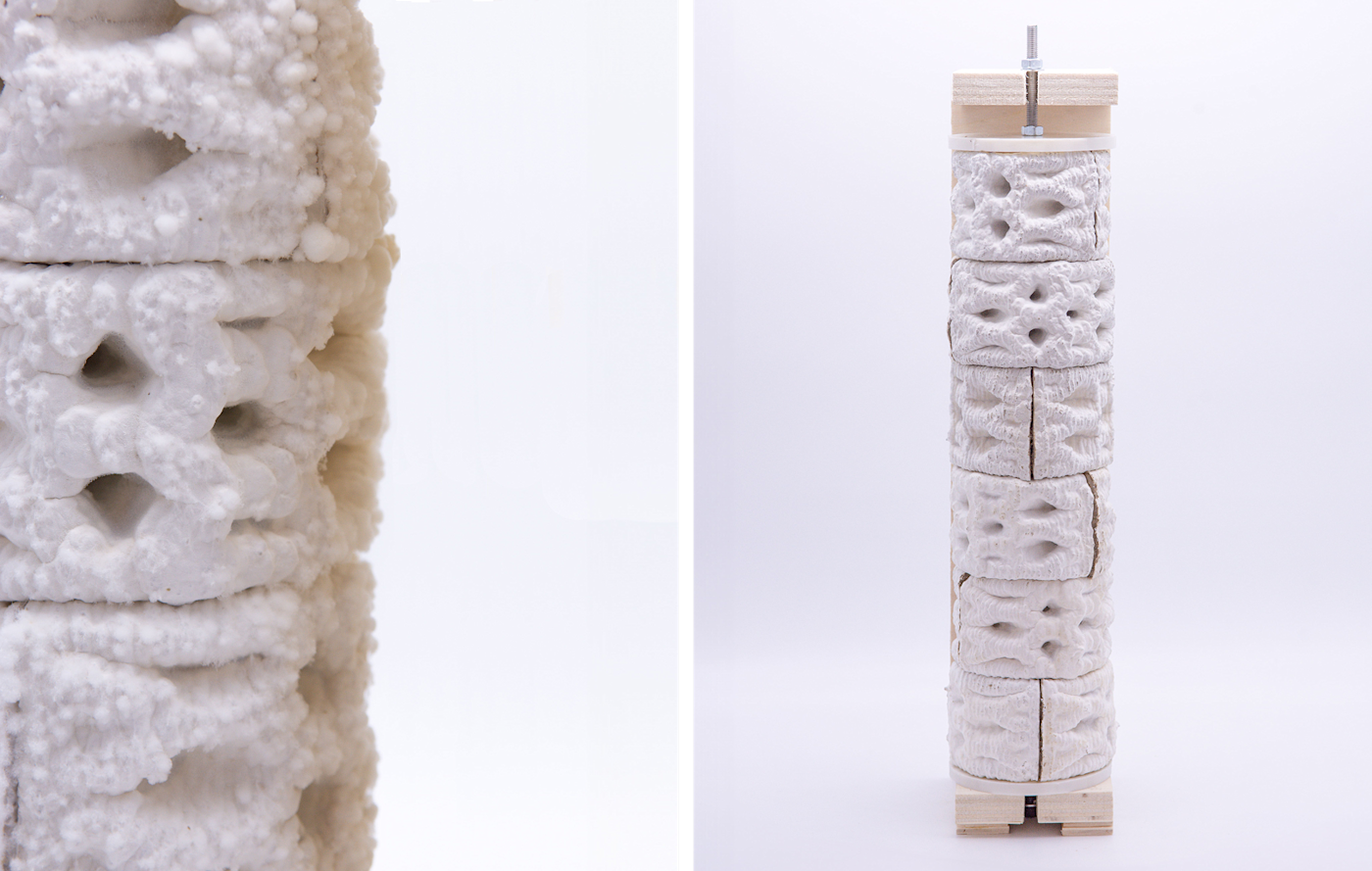
The on-field investigation was structured as a series of controlled tests, each isolating one variable at a time: printing mixture, geometry constraints imposed by both the printing process and the organism's growth, growth cycle variables, drying and handling behavior, and the bio-welding between modules. Results from each area were compared and analyzed to identify how different specimens responded in terms of colonization and structural strength, and to define the working protocol used to fabricate the final piece.
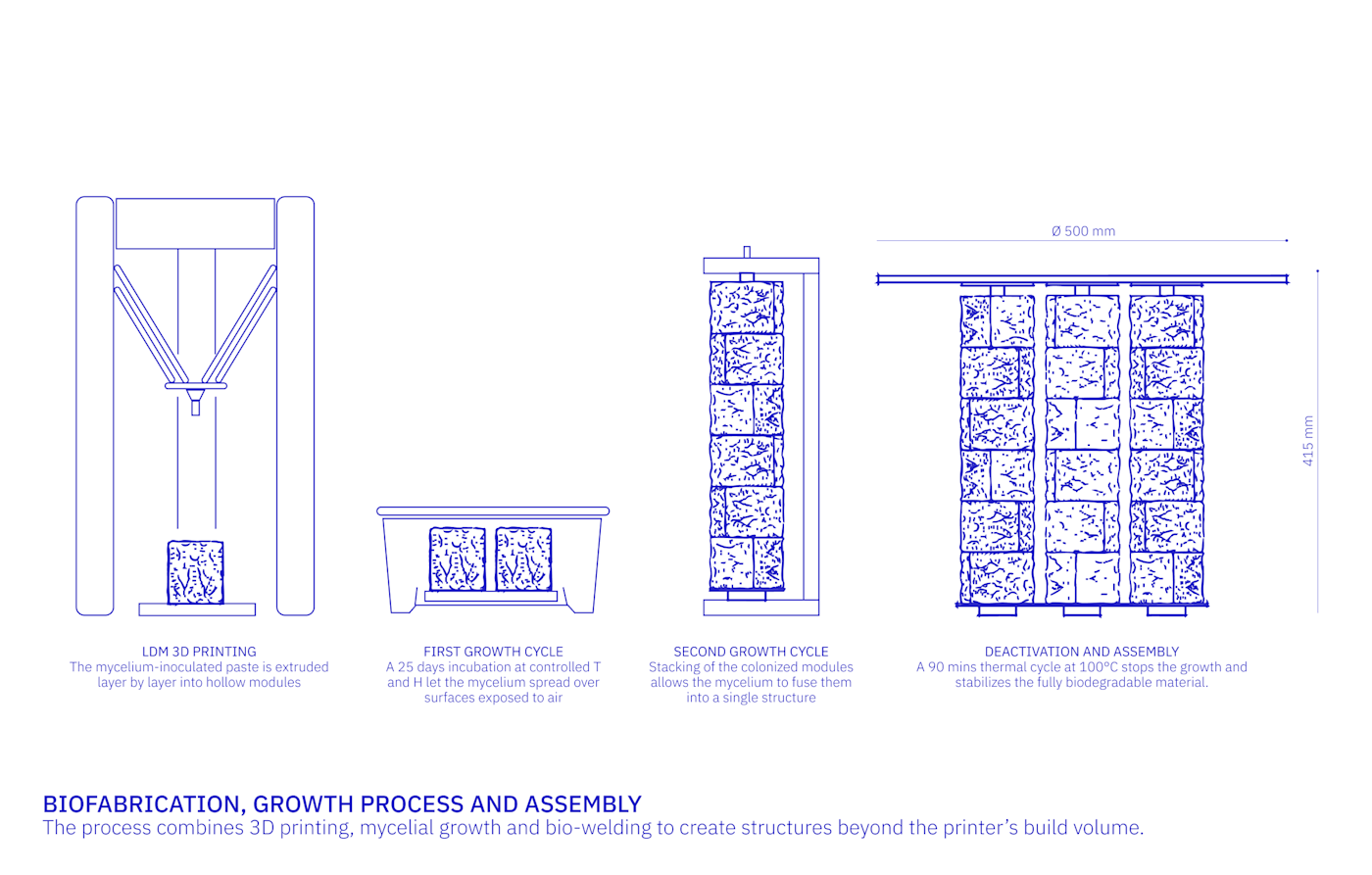
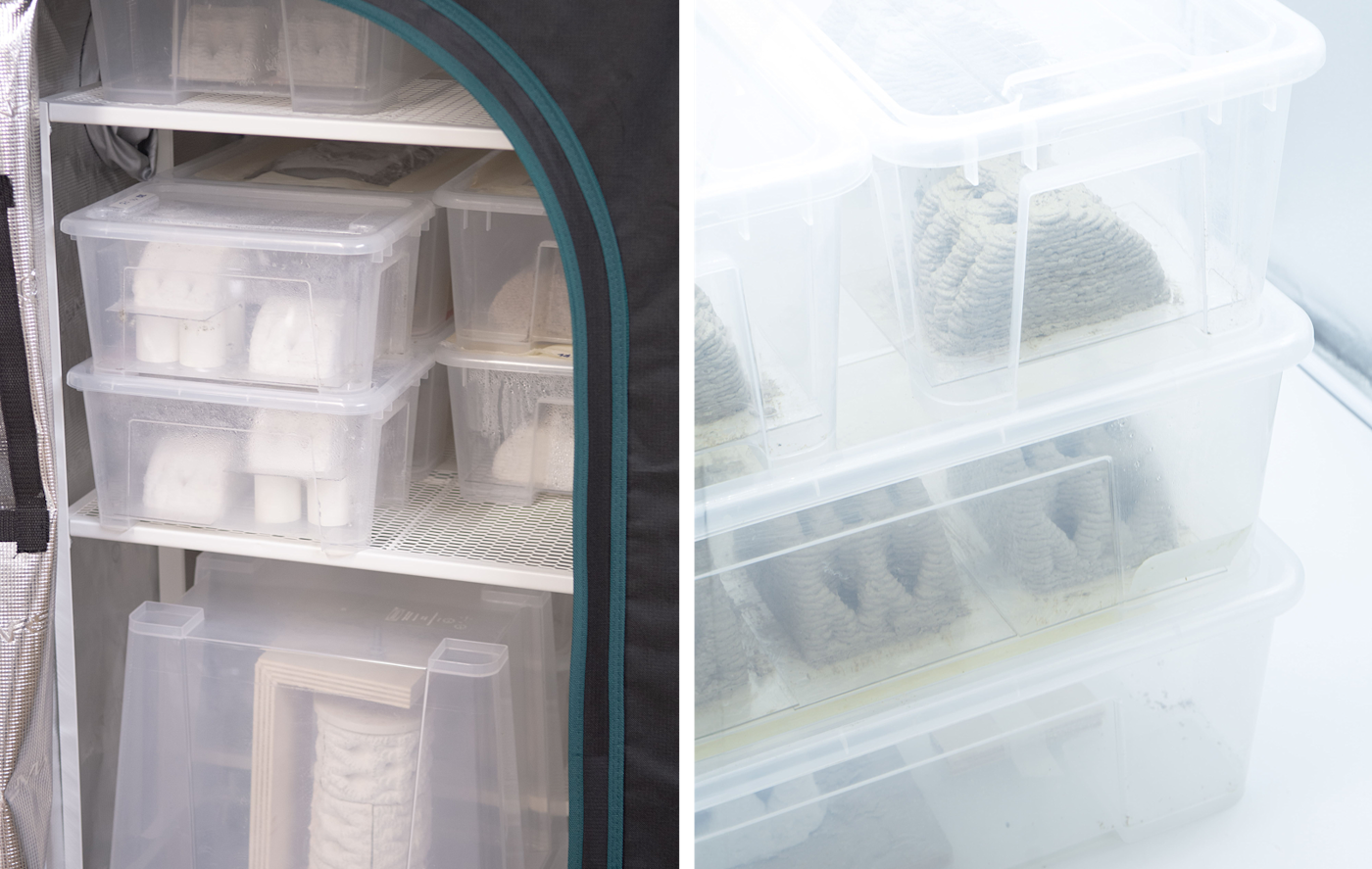
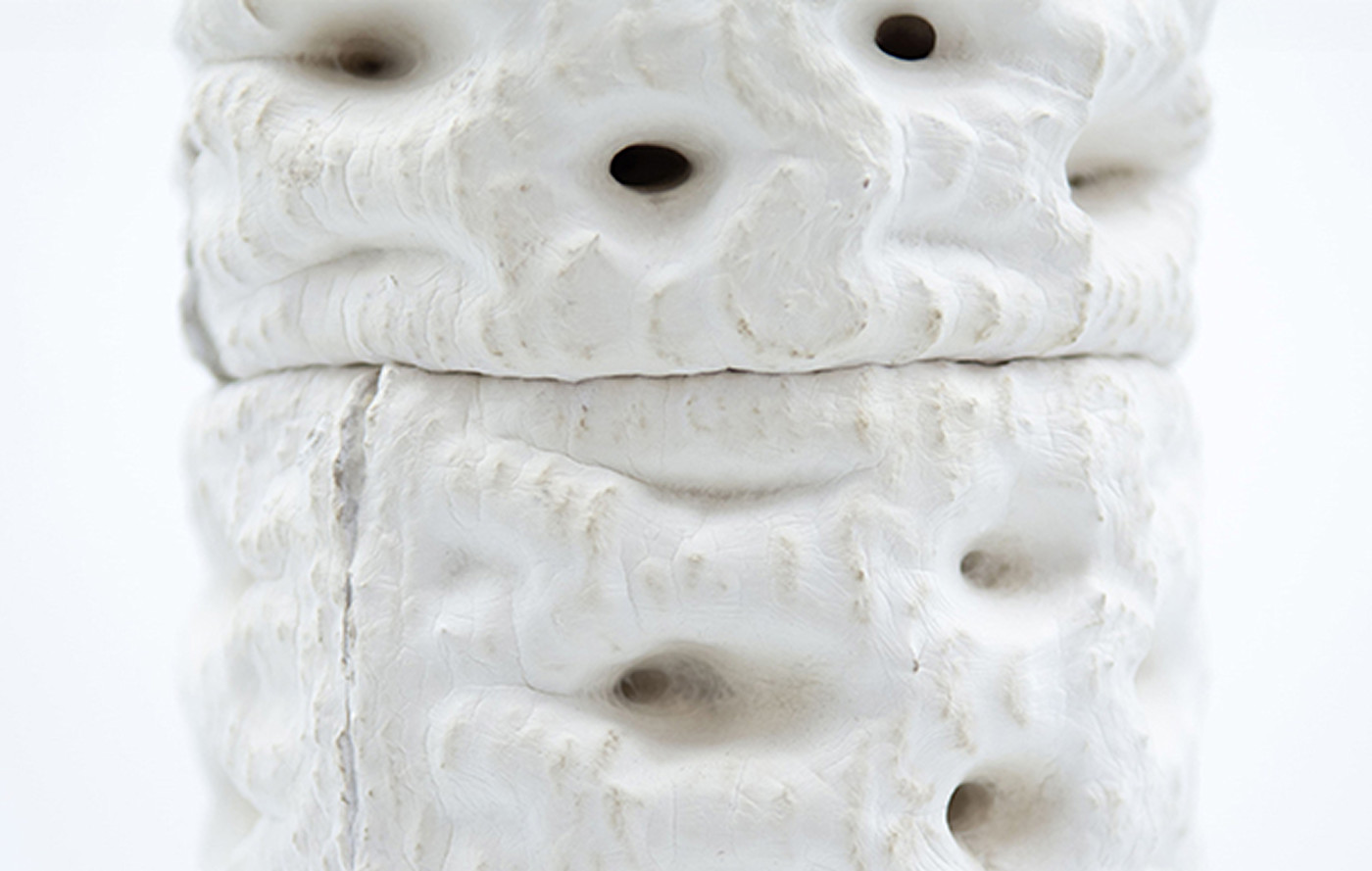
The printing paste combined sawdust inoculated with mycelium, clay, flour, xanthan gum and water. After printing, geometries were incubated for about 25 days under controlled temperature and humidity, letting the mycelium proliferate; fungal skin only forms on surfaces exposed to air so hollow geometries were essential to maximize colonization.
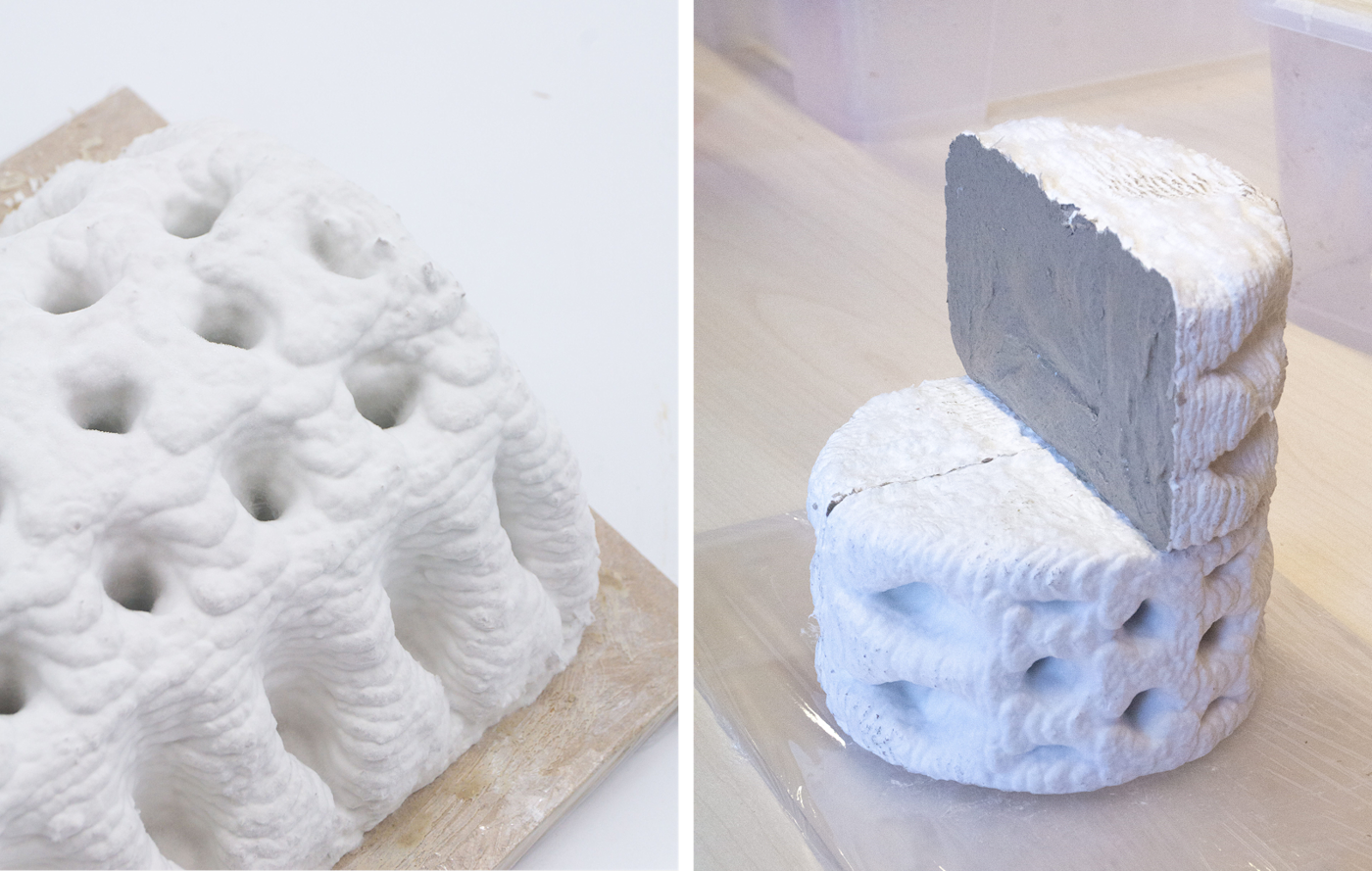
With the first cycle complete, the modules were stacked and connected for a second growth cycle: the mycelium growed across their contact surfaces and fused them into a single structure. This bio-welding process made it possible to create pieces larger than the printer could produce in a single print. A 90-minute thermal deactivation at 100°C then halted fungal growth and stabilized the resulting matrix.
The resulting material is fully natural and biodegradable at the end of the object's life; since the clay is kept in its greenware state rather than fired, it can also be reused upstream or in other applications.
 LORENZO SILVESTRI