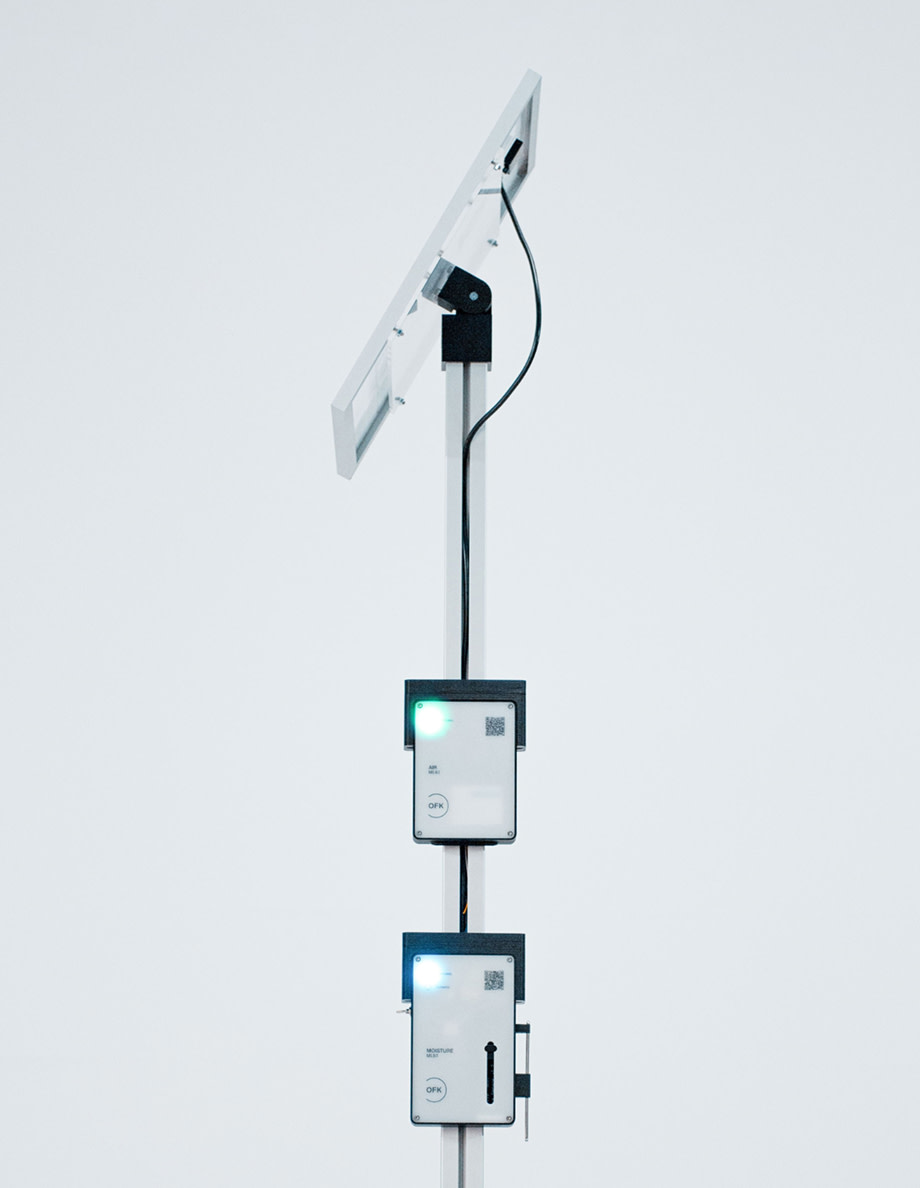
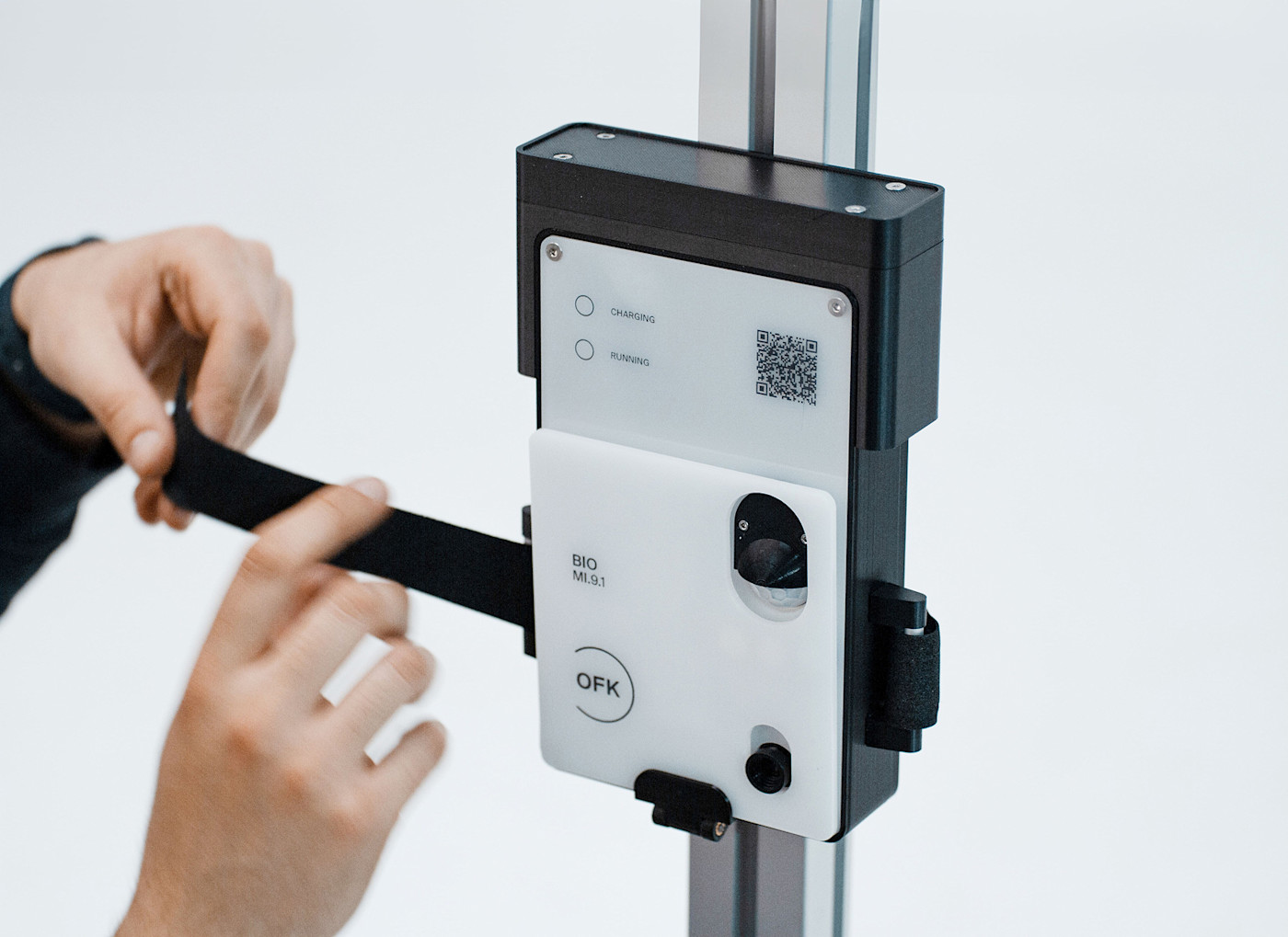
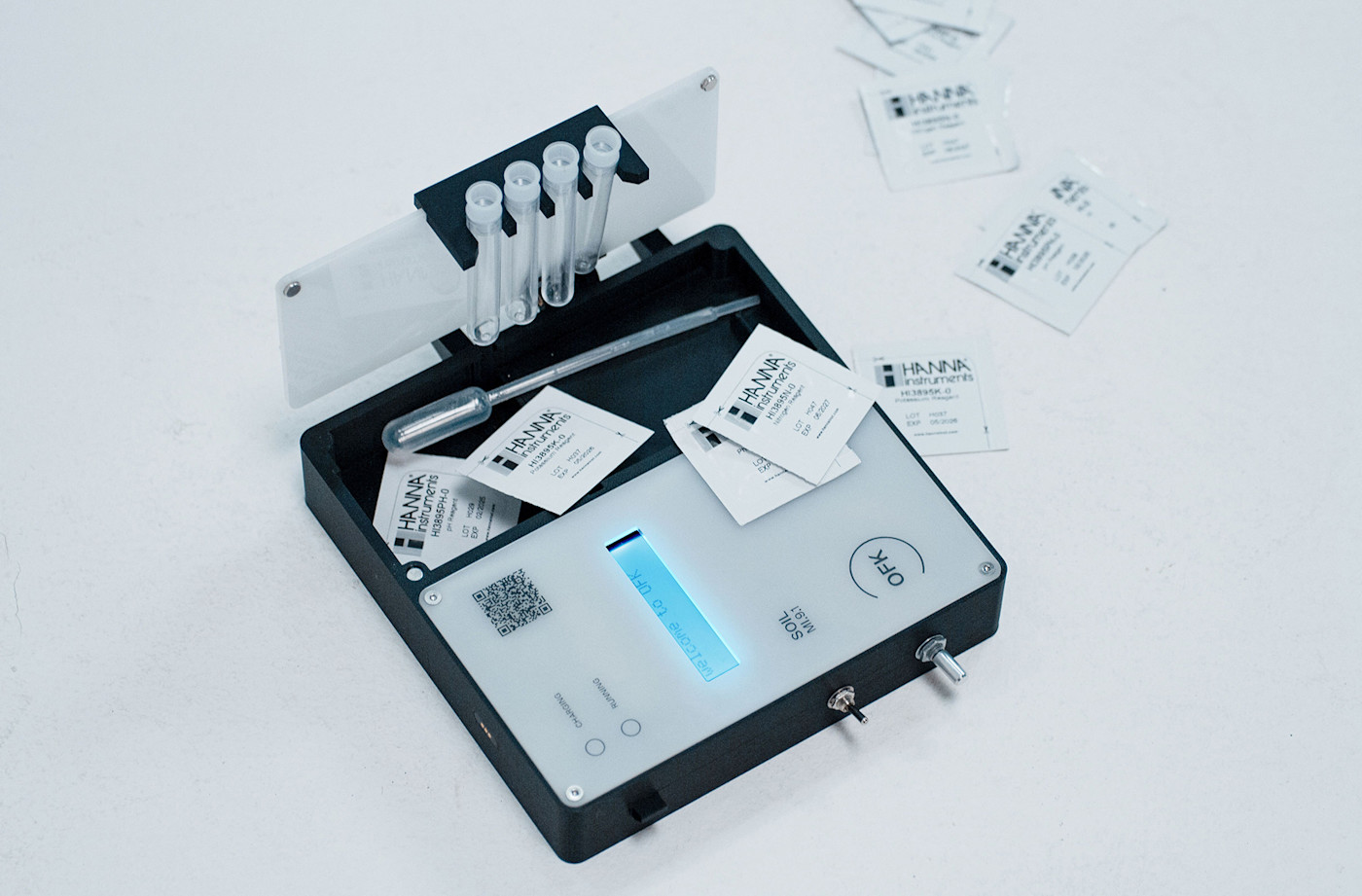
Open Farmer Kit (OFK) is a modular, solar-powered monitoring station designed for small-scale urban and social farming. Five independent modules track air quality, soil moisture, soil fertility, pollinator biodiversity, and data transmission.
OFK builds around a modular architecture where each sensing function is physically independent — a detachable unit with its own power, its own enclosure, its own interface — and communicates wirelessly via LoRa to a fixed Operational module that aggregates, stores, and uploads data to a cloud server. This separation was both a technical and a design decision: it allows partial deployment, replacement of single modules, and adaptation to different farm layouts without modifying the system as a whole.
The project, developed within the Distributed Design Platform programme (Creative Europe), originated from an earlier thesis concept from Valentino Stella and has been further developed and redesigned by the whole team for local production with makerspace-accessible components, and for distributed, open-source replication. The redesign focused on its electronic and physical architecture, engineering enclosures and assembly logic for actual digital fabrication — iterating form, fit, and fabrication constraints in parallel through repeated physical prototyping.
THE MINIATURIZATION AND INTERACTION CHALLENGE
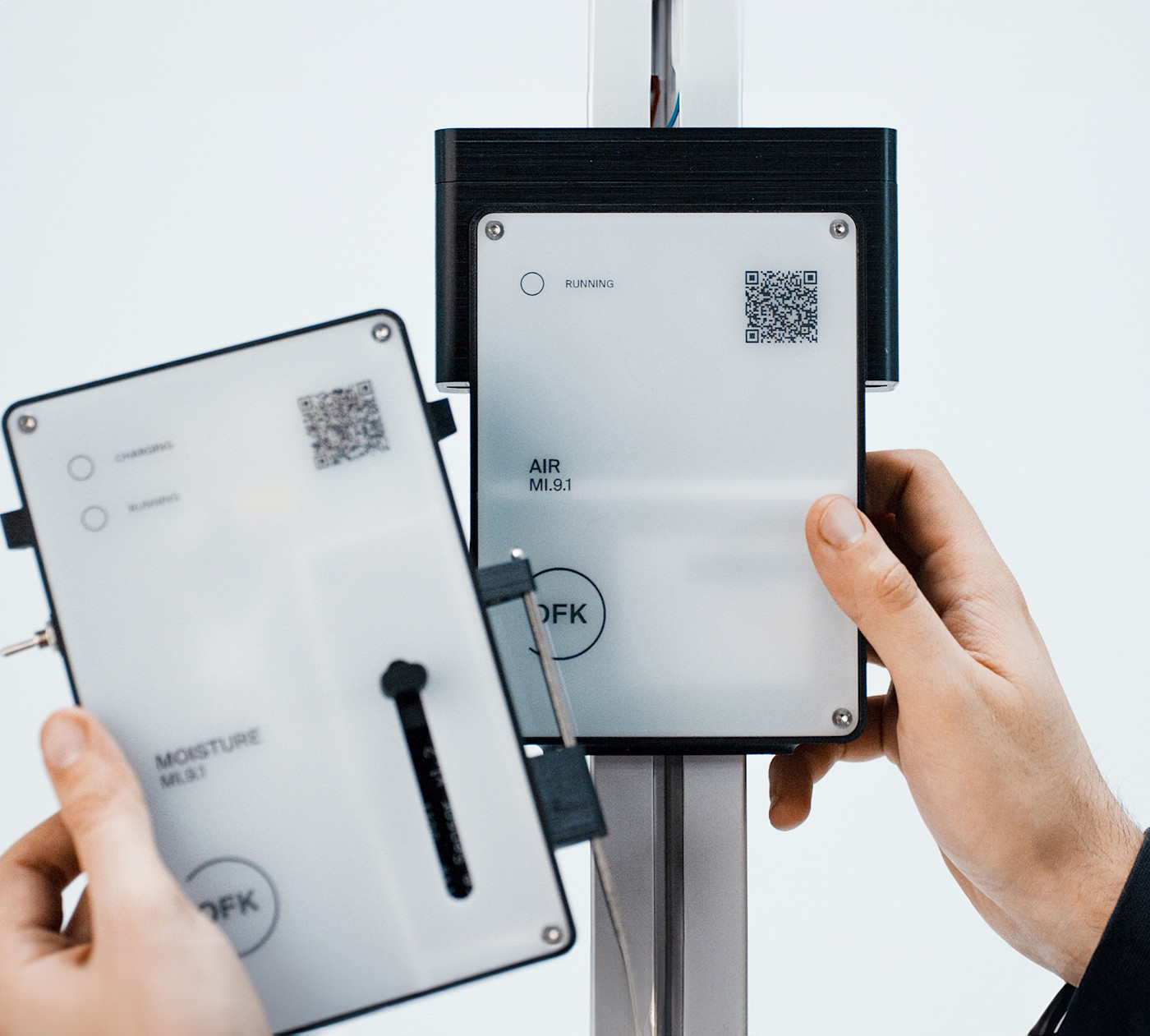
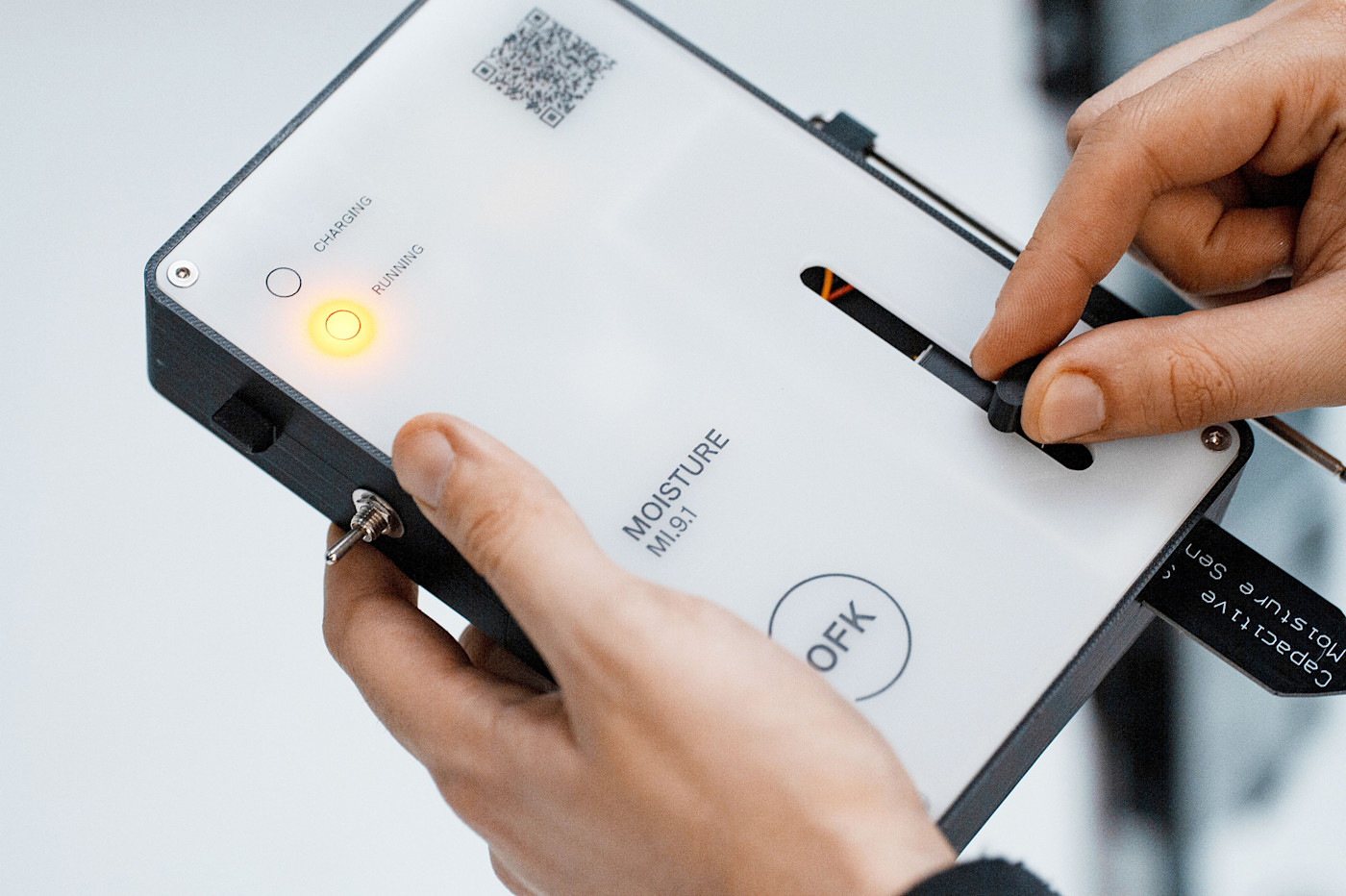
Each module is dedicated to tracking a specific parameter, with some of them largely depending on the precise sampling area within the field. This introduced the need of measuring at a distance, but still being able to communicate with the station. That means the four detachable modules require different interactions with a farmer, which made a shared logic across them a challenge to overcome.
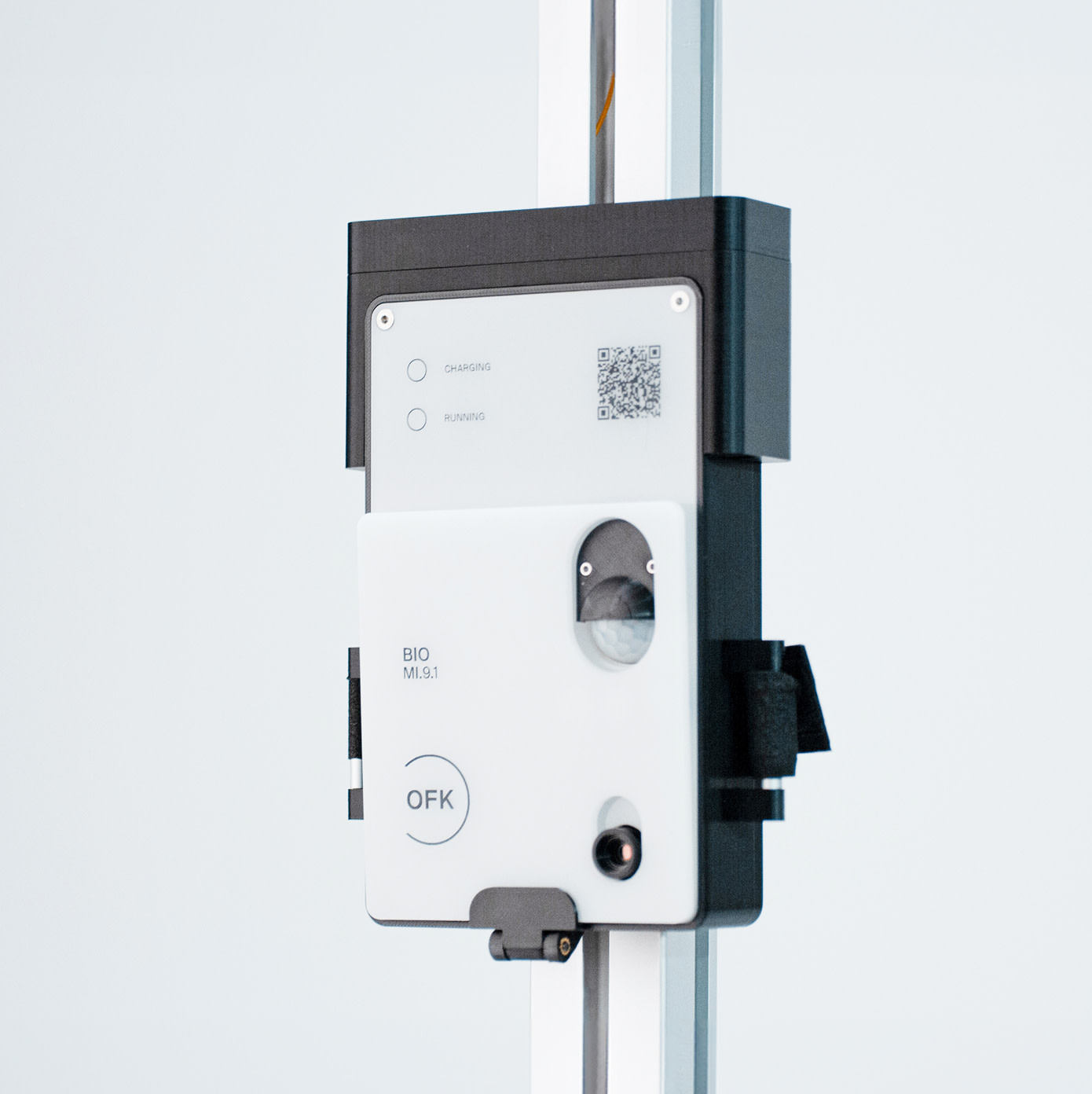
The answer was one common design for all four in terms of docking interface, proportion and aesthetics, with the differentiation limited to the electronics inside the main body: a different array of sensors, each in its own internal housing. Standardizing the outside first, then designing each module's internals to work within that limit, is what kept four functionally unrelated devices reading as one coherent system rather than four separate designs sharing a docking port.
The shared docking element was designed to facilitate the alignment of the charging contacts during each docking cycle. A rail guides each module into position, while a set of magnets pulls it the rest of the way. A small locking feature then secures the module in the same aligned position every time.
Connectivity followed a related challenge: a module operating in the field needs to communicate with the station across open ground, relying on its battery and without any wired connection. LoRaWAN addresses this trade-off by combining long-range communication with very low power consumption, matching the distances a module may have to cover from the hub on a farm and allowing the system to operate effectively in a truly open environment.
MY ROLE IN THE PROJECT
I contributed to defining the system's base architecture from the perspective of the modules and their internal components. Moreover I had a central and primary role in designing the modules and their components, and in producing them through digital manufacturing technologies, which enabled testing and subsequent iteration of the final design.